Beyond the Tools: The Human Skills That Matter in an AI World
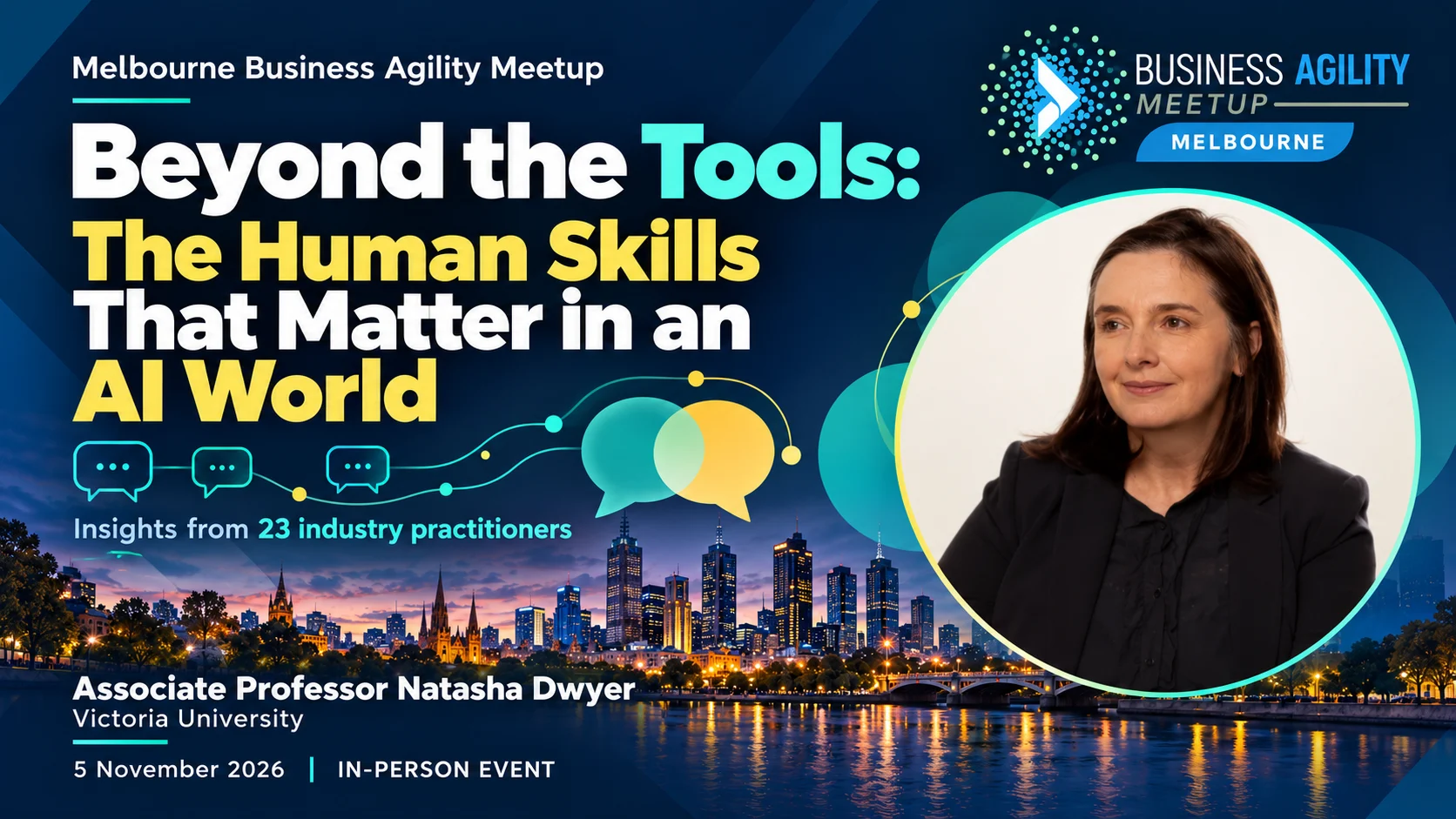
At the November Melbourne Business Agility Meetup, we welcomed Associate Professor Natasha Dwyer from Victoria University. Natasha shared recent research outcomes that surfaced the skills industry practitioners value when hiring in a world where AI is commonplace.
It was nice to see many new people attend the meetup - welcome! In conversations before and after the session, recent graduates, people looking for work and people already in employment kept asking a similar question: where do I best invest my skill development time?
Conveniently, this curiosity aligned with the research question: in an AI world, what do we learn, what do we keep practising, and how much attention do we give to human skills versus the latest tools?
The Context: Local voices, specific work
VU’s inaugural AI Skills Hackathon brought together 45 participating students to interview 23 industry practitioners. Students helped develop the questions, analysed the interviews and selected themes for an AI Playbook. VU’s Employability Unit supplied the skills definitions, giving the work a shared framework for discussing communication, teamwork, critical thinking, digital capability and other aspects of employability.
The breadth of interviewees’ roles was a big part of the appeal. The work brought together a financial planning and analysis practitioner at the Royal Flying Doctor Service, a marketing director, a clinical psychologist, a songwriter and musician, a college librarian, an engineering academic and former manufacturing engineer, a philanthropy and grants practitioner, and a general manager of people and culture in professional sport. People working in local government, data architecture, digital platforms, teaching, and organisational design added further perspectives.
In conversation, attendees particularly appreciated the local grounding and the variety of work represented. Familiar labels such as “communication skills” became more useful when people explained what these skills mean in their own jobs.
Across the research, three connected findings stood out.
Communicators continue to own what’s communicated
For the finance practitioner, AI changed how he could get to an answer. It helped him work across a technical skills gap and produce the analysis he needed. The purpose remained helping people understand their numbers and use them to improve performance.
Understanding what stakeholders actually need, what a report will be used for, and whether the report actually helps them make a decision is the work that still requires conversation.
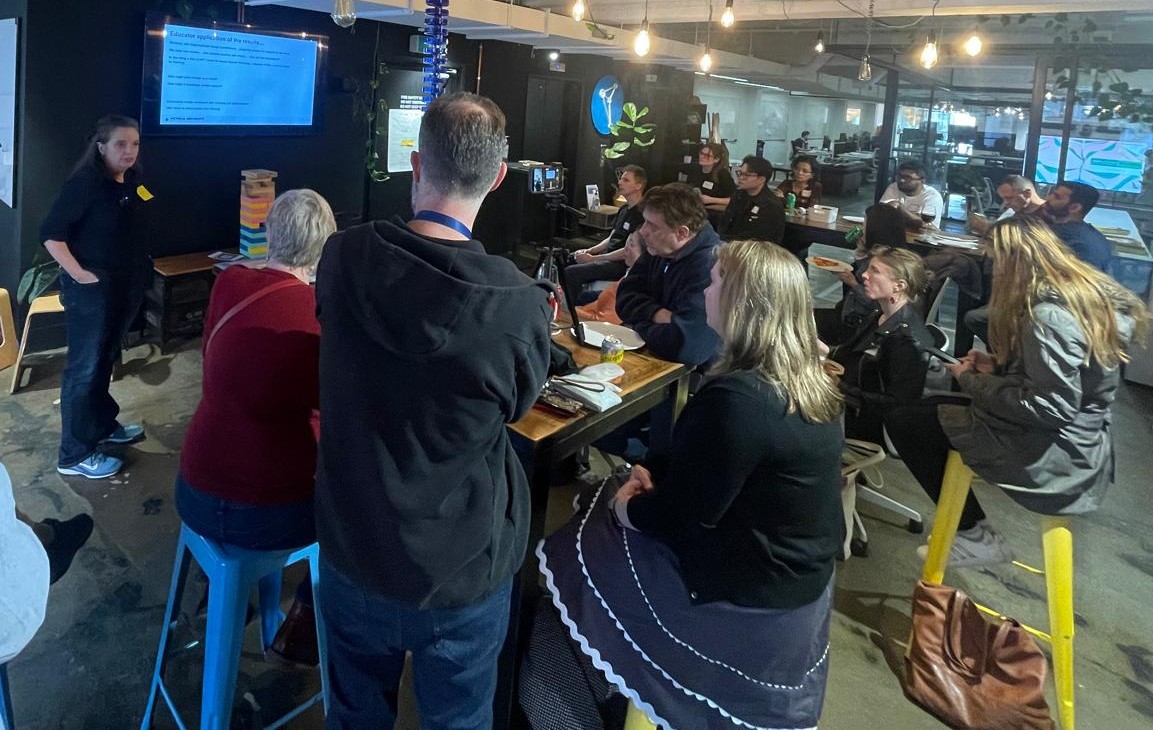
Our planning-poker discussion exposed quite different expectations about how much human effort communication would require. At one end was the expectation that AI would do much of it for us. At the other was the importance of investing human time in communicating well.
The useful point that emerged was that effort should match importance. A minor update should require very little effort with AI and human review. A conversation that affects someone’s work, resolves a disagreement or supports an important decision deserves more attention.
AI can help with both. We still need to own the conversation, including what we mean, whether the other person understands it, and what happens next.
Tool proficiency and judgement develop together
The prominence of human skills prompted another useful discussion. Several attendees I spoke with found it difficult to balance the time they invest in improving their soft skills with the time spent learning new tools.
In the research, interviewees described AI literacy as an emerging baseline expectation alongside existing professional knowledge. Interviewees consistently valued people who were curious, continued to experiment with new AI capabilities in order to identify useful applications for them, and could explain how they checked the result.
Natasha also raised the difficulty of developing expertise when AI can produce something plausible before the learner understands it. A finished output can give the impression of mastery. Since people are still responsible for their work, there’s a need to develop either mastery of the domain or the ability to check the outputs with people who have mastered it. Choose wisely!
For students and experienced practitioners alike, what makes experimentation with real work valuable is building an understanding of the problem, trying the tools, examining the results, and learning where your own knowledge needs strengthening.
Greater individual capability changes teamwork
The interviews showed benefits and tensions here.
A marketing director described being able to show clients prototypes earlier, shortening feedback loops between strategy, creative work and production. AI can help people prepare for a discussion and bring something concrete for others to improve.
Other interviewees described asking AI questions they previously would have taken to a colleague. A musician reflected on what happens when creating music no longer requires bringing other people together.
Being able to do more independently changes our reasons for interacting. Some coordination becomes easier; some opportunities to learn from each other disappear. Teams need to balance both.
What has changed, and what still holds?
The Business Agility Institute’s global 2025 research, From Constraints to Capabilities: AI as a Force Multiplier, provides a useful comparison.
Its expert panel emphasised people directing AI, critically assessing outputs, and continuing to learn. It also highlighted organisational constraints: slow decisions, rigid funding cycles and workflows that absorb the benefits of faster individual work.
VU’s interviews put those ideas into the language of particular jobs. They add detail about stakeholder understanding, professional judgement and relationships, including the possibility that greater individual independence comes at a social cost.
These are different studies with different methods. The connection is in the questions they raise at organisational and individual levels.
The evening also showed how quickly emphasis can shift. BAI’s report explicitly recommended prompt-engineering skills, and prompting featured prominently in VU’s April–May 2026 interviews. By November 2026, parts of that emphasis already felt dated to people in the room. Specialised prompting effort was attracting less attention while clear thinking about the task, supplying context and checking the result remained relevant.
A shorter opportunity to learn and adapt
This is where I think VU’s Block Model can be a superpower beyond quickly turning around research work.
With subjects taught intensively over a one-month block, there is an opportunity to quickly incorporate new learning before the course is delivered again; for courses delivered multiple times a year, this provides frequent true-up opportunities. In comparison, institutions that teach courses on a yearly schedule are often constrained by content update cycles of a year or longer.
A shorter cycle makes updating possible. Educators still need to choose to invest the time, and have the support to do it.
That is a business agility question as much as an education question: how long does it take to turn something you have learnt into a change in what you do?
VU’s industry conversations and employability framework provide useful inputs. The opportunity is to keep using them as the work changes.
Natasha’s slides are available upon request, please reach out to her on LinkedIn.
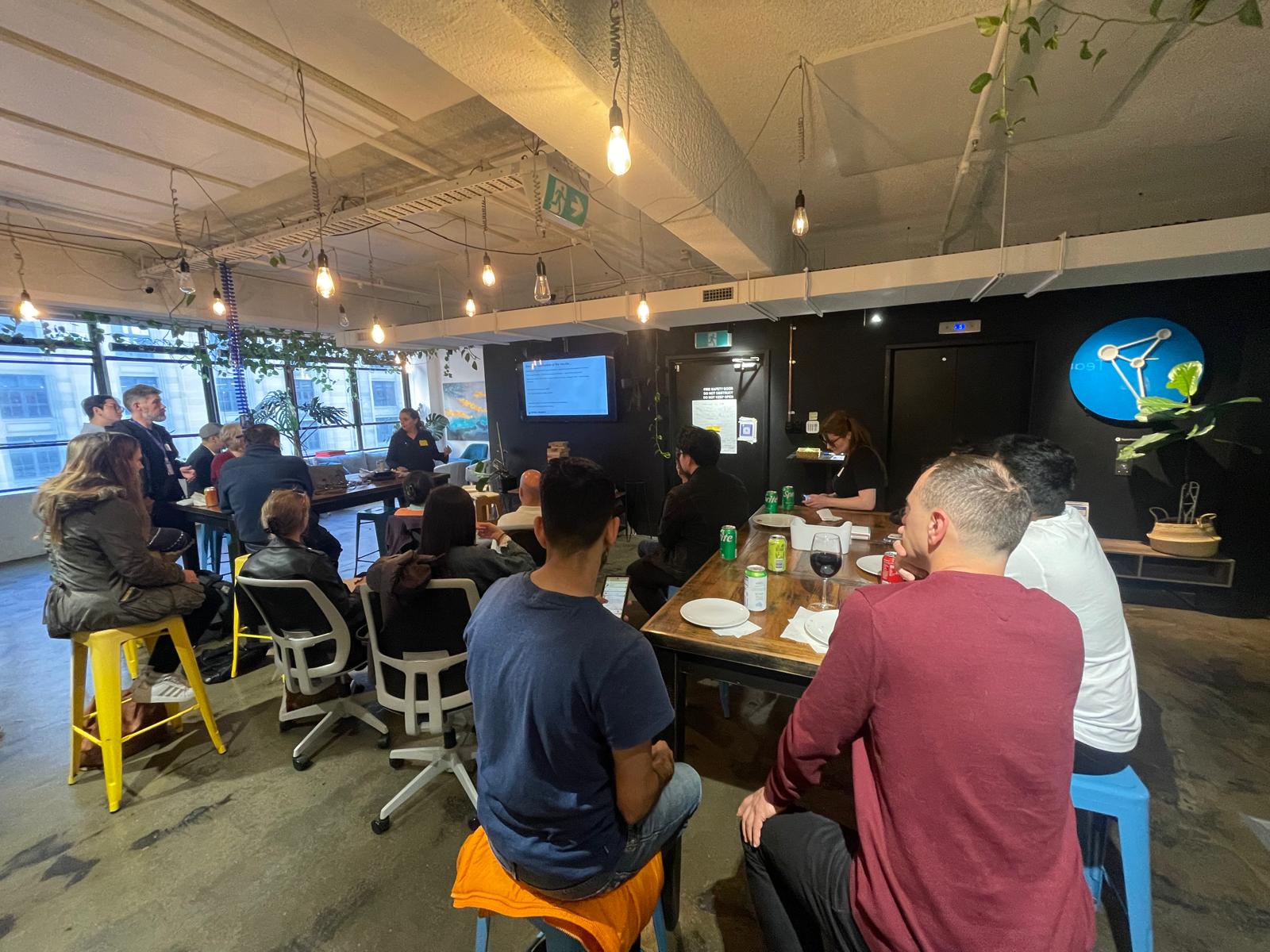
Thanks to Natasha and the VU colleagues and students behind the research, everyone who contributed to the discussion, our fellow meetup organisers, and TeamForm for providing the venue and refreshments.